
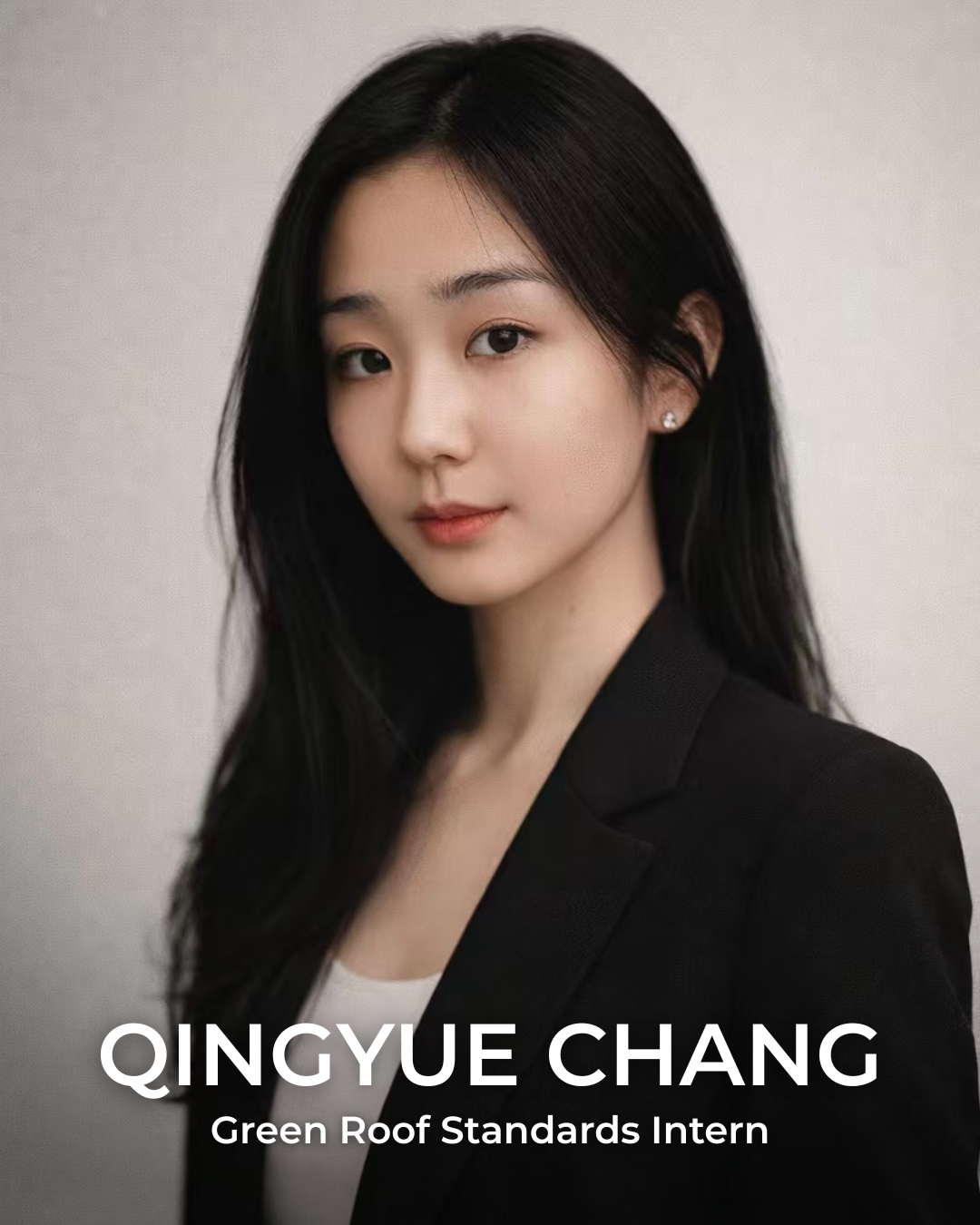
Qingyue Chang standardizes green roofing for Rice campus
Qingyue Chang is envisioning a greener Rice University, literally.
As the Summer 2026 Sustainable Architecture Fellow, she’s developing a decision-making framework to guide future green roof development across campus.
“Rice has several green roofs on campus, but every building is different. They have different structural capacities, maintenance needs, and sustainability goals,” Chang said. “Rather than designing one green roof, I'm building a process that can support many future projects.”
Green roofs are rooftop systems that support vegetation. They can provide benefits such as stormwater management, energy reduction, heat mitigation, and increased biodiversity. At Rice, they also offer the opportunity for living labs.
Not all green roofs are constructed with the same goals. For example, some are designed to cool buildings, while others are intended as biodiversity hotspots. Some are also intended for recreational use, which requires significant safety and infrastructural support. Others are designed for stormwater management.
Currently, Rice harbors over 11,000 square feet of green roofs, situated on buildings like the Oshman Engineering Design Kitchen, South Plant, and Duncan and McMurtry Colleges.
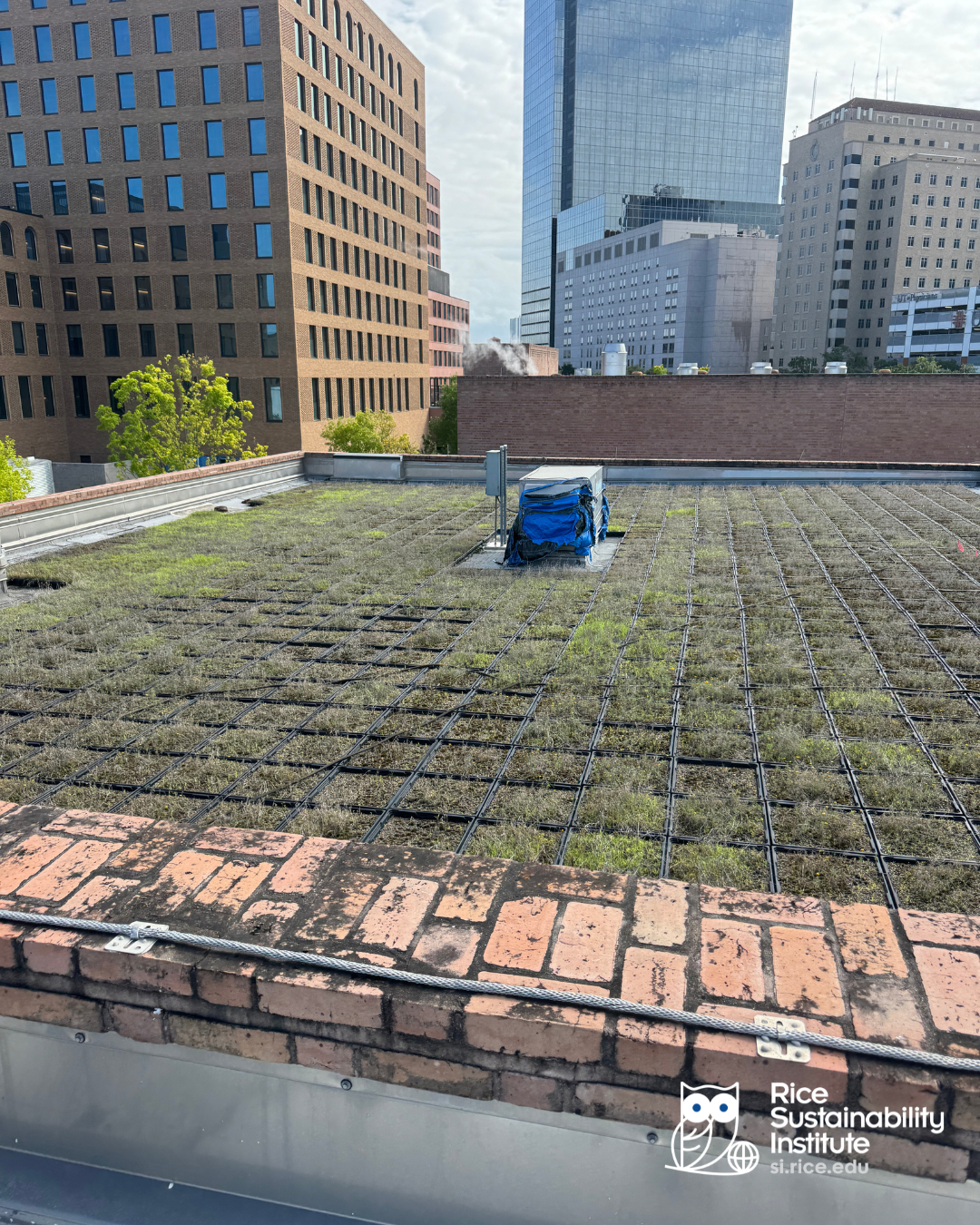
Chang said that green roofs are often treated as a one-size-fits-all solution. This approach overlooks each building’s unique conditions and the distinct goals for using the technology.
“Our project creates a framework that helps people make better decisions by connecting building conditions, project goals, and measurable performance standards. The objective is to make future projects more efficient, practical, and easier to manage over the long term," Chang said.
Chang is currently pursuing a master’s degree in Environmental Analysis at Rice. She completed her bachelor’s degree in Landscape Architecture at Victoria University of Wellington.
As the Sustainable Architecture Fellow, she collaborates with Sustainability Institute Director Carrie Masiello, Senior Executive Director for Sustainability Richard Johnson, Director of Campus Grounds and Landscape Design Brent Moon, Associate Professor of BioSciences Amy Dunham, and Assistant Teaching Professor of BioSciences Cassidy Johnson.
“[Chang’s project] will provide a roadmap for contractors to follow to ensure they are meeting our expectations and give us something solid to point to if they fail to meet the standards set forth. Having a good set of standards can make future projects easier to carry out and hopefully, set Rice as the go-to for projects like this,” Moon said.
For her project, Chang reviewed existing green roof standards and investigated Rice campus conditions to create a practical decision-making framework. The framework Chang developed first outlines standards for whether a roof is suitable given its capacity load, waterproofing, and other factors. Afterward, architects must determine the green roof’s primary purpose, whether focused on cooling, stormwater management, or creating a biodiverse habitat — with the potential to become a living lab.
Next, architects must select between lightweight extensive green roofs and heavyweight intensive green roofs, then lastly apply technical standards for vegetation, soil, and more. “The key part, I think, is translating a lot of technical information into something people can actually use,” Chang said.
Chang said the green roofing standards she’s developed can aid Rice campus sustainability projects in the future by helping future teams make faster, more consistent decisions by providing clear ways to evaluate options and compare priorities.
Streamlining the process of developing green roofs on campus can have a myriad of benefits for the campus, especially with the possibility of introducing more living laboratories, Moon said.
“There are so many studies that could be done regarding the plant life that thrives on rooftop gardens, cataloging the biodiversity of the insect and animal life that inhabits it, as well as the calming effects it may have on those able to view one out their window or to be able to spend time walking around one and just decompressing for a few moments,” Moon said.
Beyond developing green roofing standards, Chang is now evaluating the energy performance and energy-saving benefits of sustainable green roofs on campus. In particular, she’s researching how green roof systems can help reduce rooftop and indoor temperatures, improve cooling efficiency, and provide other quantitative data to support future decision-making.
For Chang, the biggest challenge for her project is navigating nuance, since each roof and project goal differs. “This experience has taught me that solving complex problems isn't about knowing every answer. It's about asking the right questions, learning from experts, organizing information, and building a system that helps people make better decisions,” Chang said.
She hopes to continue developing the skills she learned throughout her career.
“As an international student, this internship has been one of the most rewarding experiences I've had at Rice. What I value most isn't just learning about green roofs. It's having the opportunity to think systematically, organize complex information, and build something that can be useful beyond a single project," Chang said.