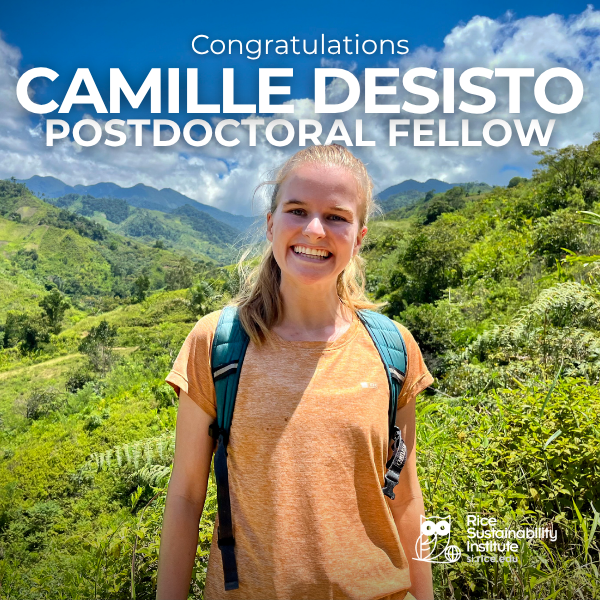
Postdoctoral Fellow Camille DeSisto advances Madagascar wildlife conservation through interdisciplinary research
Camille DeSisto has good news and bad news for Madagascar's lemurs. As a Sustainability Institute Postdoctoral Fellow, she's discovered that climate change has decreased food resources for these endangered primates. On the upside, ecological communities continue to demonstrate stability amidst change.
This July, DeSisto will finish her year-long postdoctoral appointment and join the Harvard University Center for the Environment as an Environmental Fellow.
With advisors Dr. Amy Dunham and Dr. César Uribe, DeSisto pursued interdisciplinary work from planting recorders in vanilla agroforestry plots to analyzing over a decade of data with computational tools — all to study species interactions across different scales in Madagascar.
Hailing from Boston, DeSisto said she's always loved ecology and nature. During her Ph.D. at Duke University, she began researching lemur-plant interactions and forest conservation in Madagascar, which she continued as a Sustainability Institute Postdoctoral Fellow.
Climate change threats to lemur populations
DeSisto's research reveals that changing weather in Madagascar has altered fruiting patterns for trees that lemurs feed on.
In her ongoing project, DeSisto is analyzing 15 years of climate data gathered by her collaborators. Her analyses show that changing temperature and rainfall has affected plant-lemur interaction over the years. Knowing this should make us more cautious about the implications of climate change for these endangered species, DeSisto said.
"Climate change could affect the availability of fruit for these lemurs when they really depend on these resources," DeSisto said.
On the other hand, findings also reveal functional stability in the ecological community. While lemur-plant interactions may change, DeSisto said lemurs may rely on other food sources as some grow scarce.
This stability is due to high ecosystem biodiversity. Rainforests may have anywhere from five to 26 different kinds of fruit tree species that a lemur can potentially eat from at one time.
"It's definitely not all doom and gloom," DeSisto said.
Bioacoustics fieldwork in Madagascar
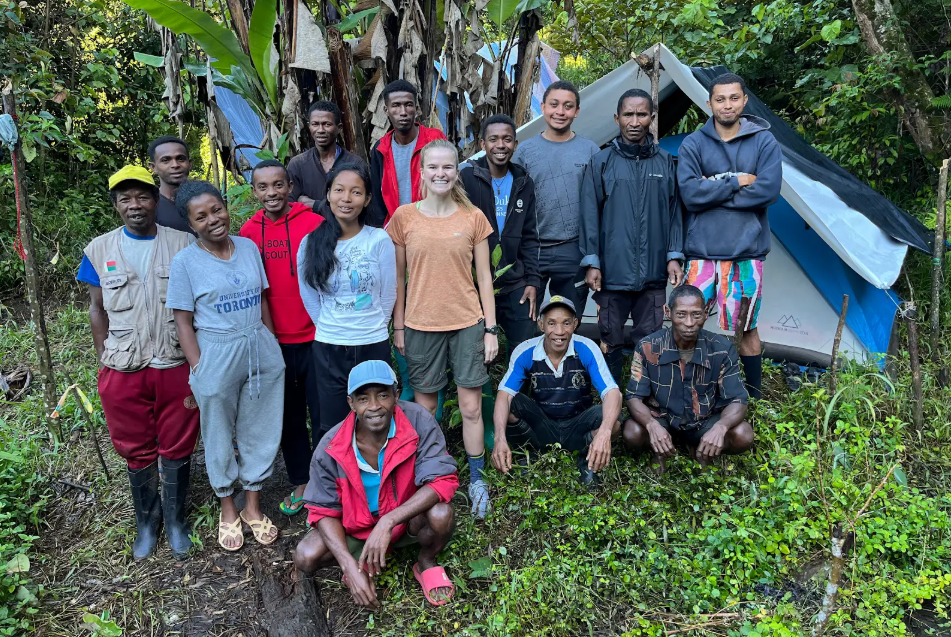
DeSisto also pursued bioacoustics research that took her to the Malagasy rainforests this March.
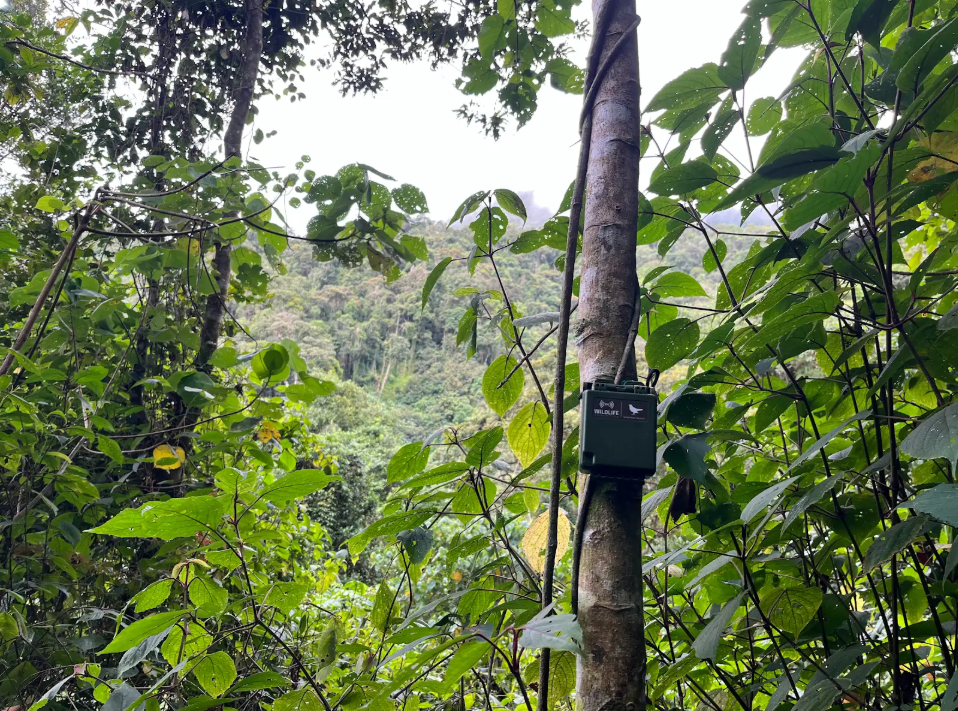
By planting recorders in rainforests and analyzing sound, DeSisto investigated biodiversity in agroforestry fields and natural forest areas to see the impacts of different land use practices. Her research also explores the extent that agroforestry may complement natural forests.
DeSisto said fieldwork was both the hardest and most enjoyable part of her postdoctoral fellowship.
"I like to think of myself as pretty fit, but, man, to set up these recorders, to get to people's agroforestry plots, you're hiking up and down mountains, no trails, crazy paths, leeches everywhere," DeSisto said. "It's always physically and mentally challenging, but it's also so awesome and a huge reason why I do all of this."
Interdisciplinary collaboration
DeSisto's projects explored ecology and human activity across different research disciplines, from on-the-ground data collection to computational and mathematical approaches in data analysis.
"That's one of the motivating factors that brought me to the Sustainability Institute," DeSisto said. "It's allowed me to be very interdisciplinary and continue asking questions that have an ecological foundation, but also deeply engage with the human side of things."
In addition to advisors Dunham and Uribe, DeSisto partnered with Rice undergraduate William Vollen and visiting Ph.D. student Maria Jose Guerrero Muriel for computational analysis, local researchers in Madagascar, conservation organizations, community forest management groups, and more.
"The thing I'm most proud of is being able to bring together lots of different folks on these different projects," DeSisto said. "It's been the most rewarding part, and hopefully a lot of these collaborations will continue into the future."
Looking ahead: research implications and Harvard postdoctoral fellowship
As she continues researching weather and plant-animal interactions, DeSisto said that she hopes her results can aid conservation efforts in Madagascar.
"Hopefully we can generate more awareness about how these patterns [of ecological change] are happening over long time scales, which I think is relatively uncommon," DeSisto said.
DeSisto also said that the act of doing science itself is important. Ultimately, she said she hopes her findings can help move the field forward.
DeSisto's next steps take her to the Harvard University Center for the Environment, where she will continue similar research as an Environmental Fellow.