
The Critical Materials Recovery and Recycling Working Group is producing membrane-based approaches to critical materials recovery

Billions of dollars worth of critical materials currently sit in landfills, and a Rice Sustainability Institute working group is looking to recover them.
Much of the electronics we use today depend on critical materials, which are metals, minerals, and other substances important to manufacturing and liable to supply disruption. These materials — such as gallium, copper, and lithium — are key for making semiconductors, lithium-ion batteries, and more.
While global demand for electronics continues to rise, the United States lacks sufficient natural deposits of these heavy metals and rare earth elements. With global e-waste projected to reach 90 million tons by 2030, recycling has become increasingly important.
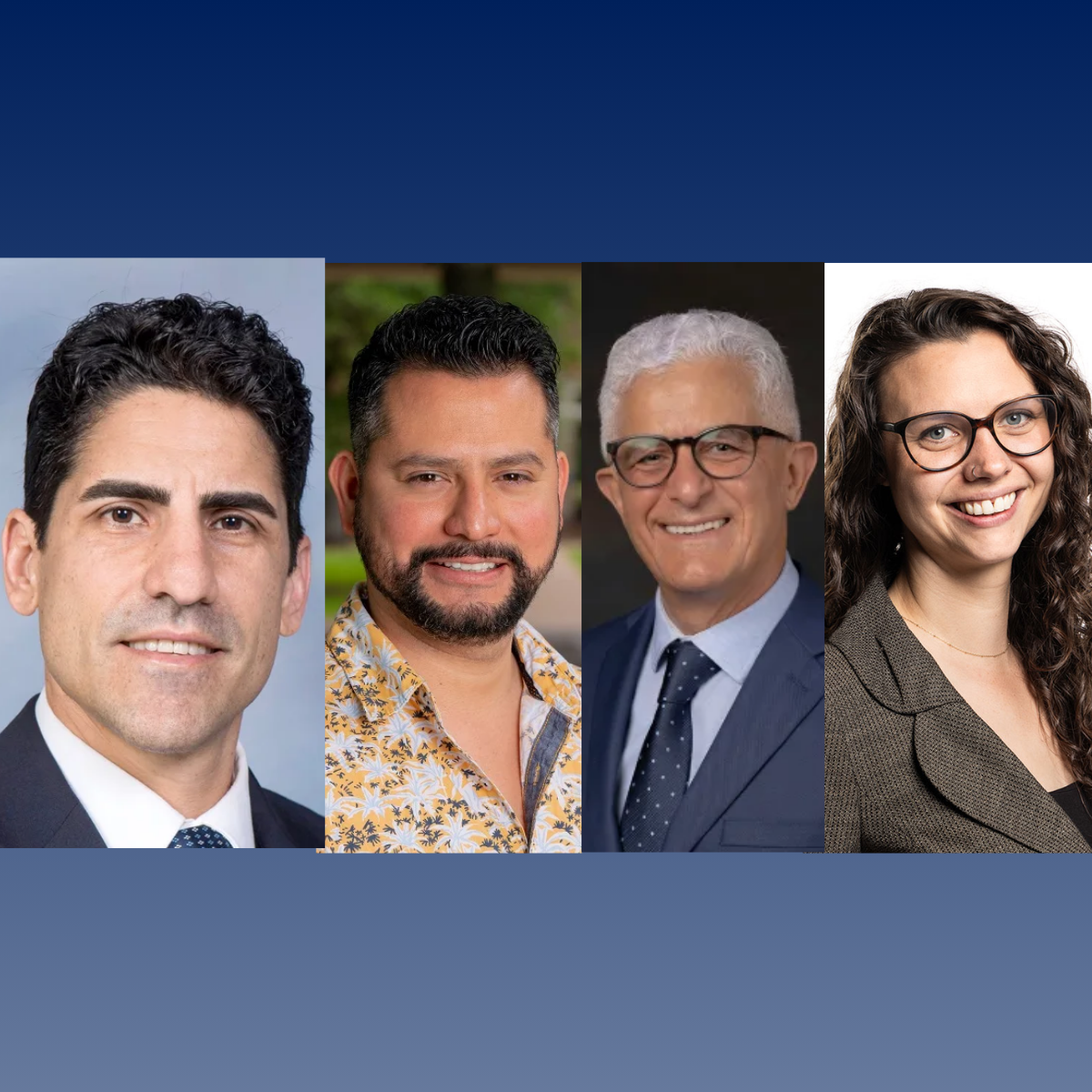
Led by Rice University’s Rafael Verduzco, the Sustainability Institute’s Critical Materials Recovery and Recycling Working Group is developing viable membrane-based methods for critical materials recovery.
“This is a big problem that the U.S. government and industry has recognized that we have to try and solve,” Verduzco said. “The challenge is recovering materials in a cost-effective way and in a way that is scalable.”
Verduzco is the A. J. Hartsook Professor of Chemical and Biomolecular Engineering at Rice University. His work focuses on designing polymers and nanomaterials for sustainability applications.
The Critical Materials working group also includes Nancy and Clint Carlson Professor Menachem Elimelech in the Department of Civil and Environmental Engineering and Chemical and Biomolecular Engineering, Assistant Professor of Chemistry Raúl Hernández Sánchez, and Membrion Product Development Director Emily Rabe.
One method of recycling e-waste is through acid leaching, a process of dissolving separated metal components with acid. The resulting aqueous solution is composed of metals and salts, which must then be separated for reuse.
“We can probably separate all these ions, metals, and salts in very expensive ways using analytical chemical methods in the lab, but we need to think on a big scale if we’re going to make them sustainable and cost-effective,” Verduzco said.
Verduzco’s working group is currently developing different types of thin, semi-permeable barriers to separate desired ions from other substances, acting like a filter.
One such project is with polymer membranes, which Verduzco said can be mass-produced at a low cost.
However, the challenge with using polymer membranes is that the material has trouble separating similar-sized ions, such as copper, nickel, and magnesium.
To solve this problem, Verduzco’s team introduced chemical functional groups to the membrane that will specifically interact with a desired metal.
So far, they’ve added ligand molecules onto the polymer membranes which have chemical functional groups that bind selectively with copper ions.

When applied to mining wastewater, the ligand-functionalized polymer membrane filters out copper while rejecting 80% to 90% of other ions. After passing through two membranes, copper concentration increases from 1% to 32%.
“The potential impact is not necessarily for copper, but also for whether or not we can apply this same strategy and recover gallium, yttrium, indium, and any other metal, because it’s a very general approach to recovering critical materials,” Verduzco said.
In addition, the Critical Materials working group collaborates with national labs and cleantech company Membrion, which specializes in developing ceramic membranes to recycle elements like lithium, cesium, rubidium, and strontium.
Verduzco said his team recently submitted a proposal in collaboration with Membrion, Arizona State University, and PhosphorTech to recycle gallium and copper from LED devices.
“There’s such a big need for trying to figure out how to recycle or recover these metals. All of these technologies can contribute a part to that,” Verduzco said. “Likely one technology will not solve the entire problem, but it can be a piece of the multi-stage process that we hope can eventually be cost-effective and implemented.”
As the Critical Materials working group looks for other external funding sources, Verduzco said he hopes to continue partnering with industrial and national partners to scale the technology and find new opportunities.